The Real Shift in Pricing Strategy
Most e-commerce retailers get pricing intelligence wrong. They treat it as a reflex: track a competitor’s price, drop yours, hope for the best. That’s not strategy; that’s panic. Real pricing intelligence isn’t about matching individual list prices. It’s about reverse-engineering how competitors structure their entire catalog to balance market share with margins. It’s the architectural blueprint of their business.
Mapping the Matrix
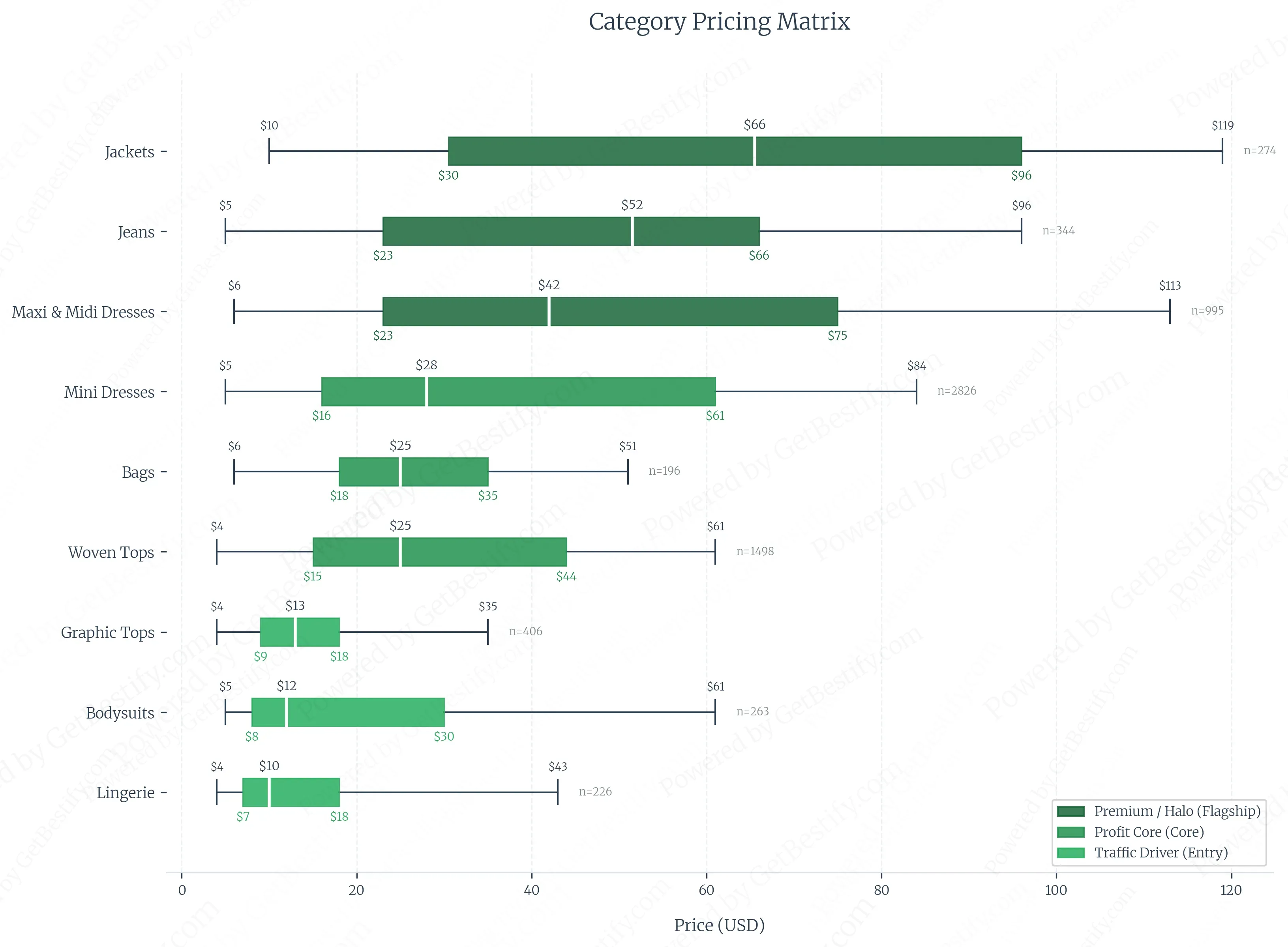
To dominate a market, you have to map a competitor’s portfolio. Prices aren’t random. They are engineered to serve specific functions. Look at any major fast-fashion retailer, and you’ll see an asymmetric price architecture. The foundation is broad and cheap—high-volume apparel designed to grab attention. Above that, selective premium categories lift the brand’s perceived value.
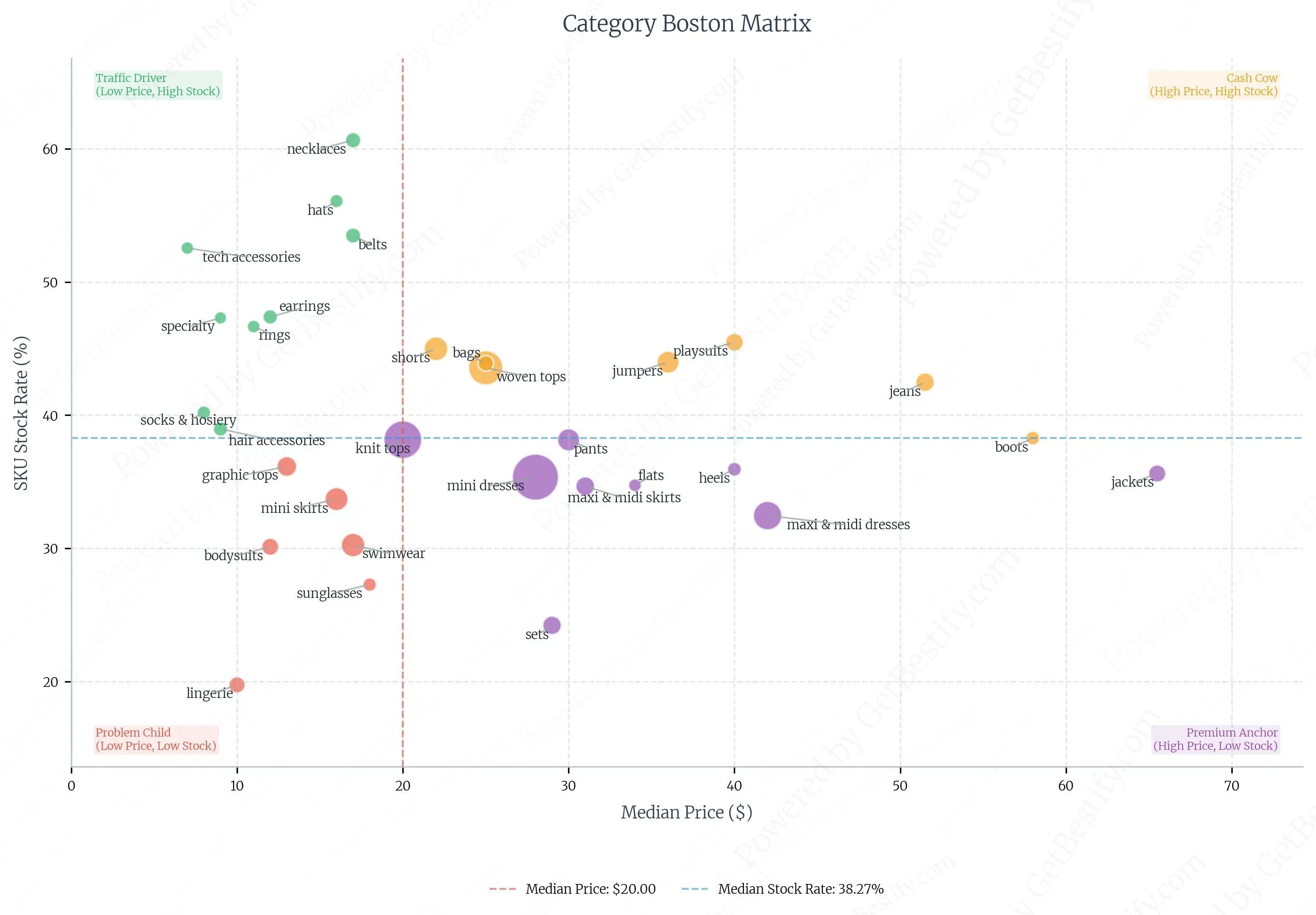
This visual model shows how brands balance customer acquisition against profit. By segmenting catalogs based on median price and volume (SPU), we can decode the actual revenue engine.
The Traffic Engine
The base layer is all about traffic. Categories like graphic tops, bodysuits, and accessories are priced at or below $15. These items often have lower stock depths and aren’t meant to be fulfillment heavyweights. Instead, they are high-turn, low-margin drivers. Their job is to maximize conversion speed and capture consumer intent at the top of the funnel.
The Profit Core
Above that sits the core revenue engine. This includes knit tops, woven tops, and standard bottoms, usually priced between $20 and $36. This tier has strong volume and healthy stock rates. It’s not just filler; it’s the primary mid-tier revenue driver, relying on catalog breadth and repeat purchases to scale.
Premium Anchors
At the top are the premium anchors: outerwear, premium footwear, and denim. These sit above a $40 median price. They make up a smaller fraction of the catalog and have modest inventory, but they punch above their weight in terms of brand authority and margin. They signal quality and act as cross-sell catalysts, protecting the bottom line while lifting the brand’s overall image.
Executing the Strategy
Mastering this means auditing your own catalog against these benchmarks. Don’t try to drive traffic with high-margin anchors, and don’t erode your profit core by blindly matching prices. Use this intelligence to align merchandising with what consumers are actually willing to pay for different segments. Looking at median prices against SKU volume tells you exactly where competitors are placing their financial bets.
Getting Clarity
Building this kind of intelligence internally is a headache. It requires serious data modeling. But you don’t have to start from scratch. We map the pricing architectures of market leaders to help you optimize positioning and recover hidden margins.
You can see this analysis in action by downloading our free condensed report, How This Store Makes Money. It’s extracted from our full analytical suite and shows how identifying pricing bands and catalog gaps can shift your strategy from reactive discounting to proactive growth.